
Life in the Plantations photo

Life on Southern Plantations: Slavery and Resistance

  1. Puritanism and Expansionism in Early America
  2. The New American Nation: Constitution and Early Republic
  3. America’s Years of Growth: From Monroe to Jackson
  4. Westward Expansion: America’s Road to the Pacific
  5. North and South Before the American Civil War
  6. Antebellum South: Society, Slavery and Secession
  7. Reconstruction After the American Civil War
  8. American Society in the Early Nineteenth Century
  9. Life on Southern Plantations: Slavery and Resistance
  10. O’Sullivan’s Manifest Destiny: Meaning and Legacy
  11. The American Civil War: Causes, Battles and Consequences
  12. The Road to the American Civil War, 1850–1861
  13. The American Revolution: Causes, Independence and Legacy
  14. Jeffersonian America: Expansion, Embargo and the Road to War
  15. Reform Movements in Antebellum America
  16. African American Life and Resistance Before the Civil War

Life on Southern plantations was organised around forced labour, racial domination and the constant threat of violence. Enslaved people had little legal control over their work, movement or family lives. Nevertheless, they created communities, preserved cultural traditions and resisted slavery in both visible and everyday ways.

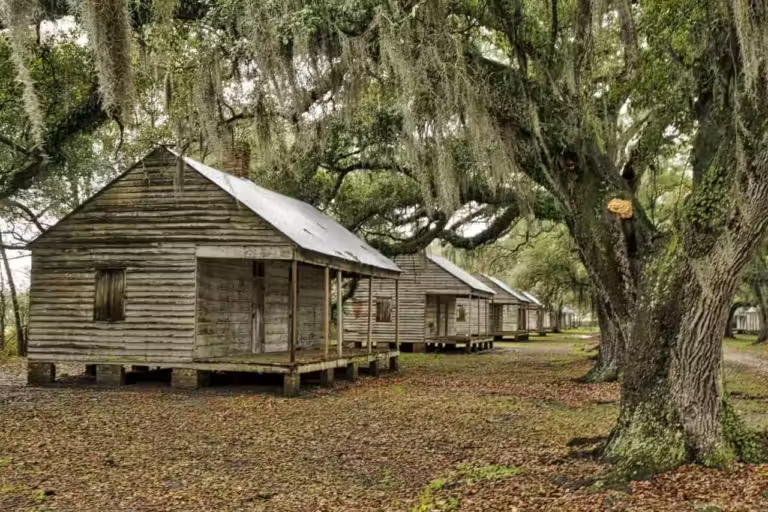
The plantation occupies a powerful place in representations of the antebellum American South. Popular culture has often focused on elegant mansions, wealthy planters and cultivated landscapes.

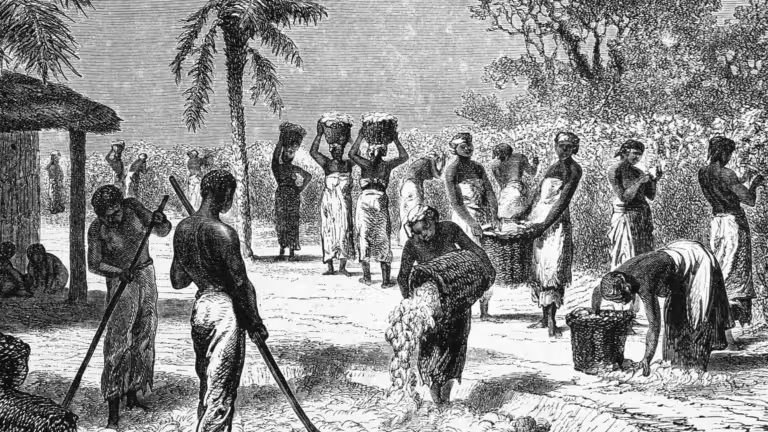
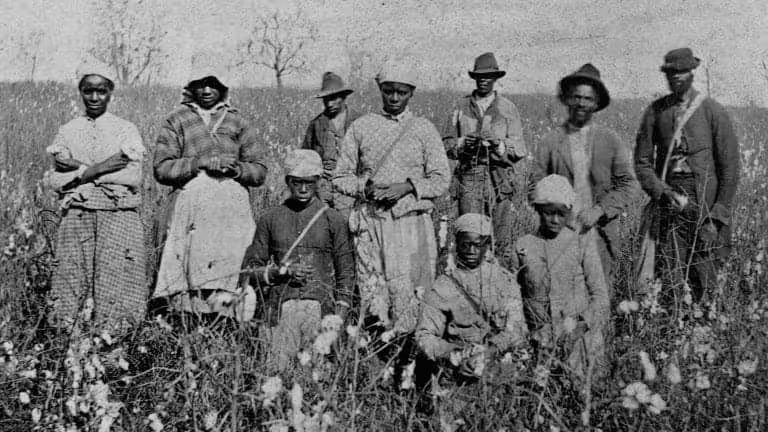
This image conceals the institution that made plantation wealth possible: racial slavery. Plantations functioned through the coerced labour of men, women and children whom the law treated as property.

The experiences of enslaved people varied widely. Conditions depended on the crop, region, size of the estate, type of labour, personality of the enslaver and strength of the enslaved community.

However, every plantation shared one basic reality. Enslaved people could not freely choose their work, employer, residence or future. Enslavers claimed ownership over their labour and, under the law, over their bodies.
Lire Life on Southern Plantations: Slavery and Resistance

Social context of America in the early 19th century photo

American Society in the Early Nineteenth Century

  1. Puritanism and Expansionism in Early America
  2. The New American Nation: Constitution and Early Republic
  3. America’s Years of Growth: From Monroe to Jackson
  4. Westward Expansion: America’s Road to the Pacific
  5. North and South Before the American Civil War
  6. Antebellum South: Society, Slavery and Secession
  7. Reconstruction After the American Civil War
  8. American Society in the Early Nineteenth Century
  9. Life on Southern Plantations: Slavery and Resistance
  10. O’Sullivan’s Manifest Destiny: Meaning and Legacy
  11. The American Civil War: Causes, Battles and Consequences
  12. The Road to the American Civil War, 1850–1861
  13. The American Revolution: Causes, Independence and Legacy
  14. Jeffersonian America: Expansion, Embargo and the Road to War
  15. Reform Movements in Antebellum America
  16. African American Life and Resistance Before the Civil War

American society changed profoundly during the first half of the nineteenth century. Population growth, westward migration, industrialisation, religious revival and mass politics created new opportunities. However, slavery expanded, Indigenous nations lost territory, women lacked political rights and racial inequality exposed the limits of American democracy.

The early nineteenth century was a period of extraordinary transformation in the United States. Between 1800 and 1850, the country’s population multiplied, its territory expanded and its economy became increasingly connected by roads, canals, steamboats and railways.

Americans celebrated political equality, individual opportunity and national progress. Voting rights expanded for most white men, while new religious and reform movements encouraged ordinary people to reshape society.

Yet these developments remained profoundly unequal. Millions of African Americans were enslaved. Indigenous nations faced dispossession and forced removal. Women had few independent legal rights, while free Black Americans encountered systematic discrimination.

Understanding this period, therefore, requires more than a simple story of democratic progress. It was an age of freedom and coercion, economic growth and insecurity, political participation and exclusion.

Lire American Society in the Early Nineteenth Century

The Reconstruction photo

Reconstruction After the American Civil War

  1. Puritanism and Expansionism in Early America
  2. The New American Nation: Constitution and Early Republic
  3. America’s Years of Growth: From Monroe to Jackson
  4. Westward Expansion: America’s Road to the Pacific
  5. North and South Before the American Civil War
  6. Antebellum South: Society, Slavery and Secession
  7. Reconstruction After the American Civil War
  8. American Society in the Early Nineteenth Century
  9. Life on Southern Plantations: Slavery and Resistance
  10. O’Sullivan’s Manifest Destiny: Meaning and Legacy
  11. The American Civil War: Causes, Battles and Consequences
  12. The Road to the American Civil War, 1850–1861
  13. The American Revolution: Causes, Independence and Legacy
  14. Jeffersonian America: Expansion, Embargo and the Road to War
  15. Reform Movements in Antebellum America
  16. African American Life and Resistance Before the Civil War

Reconstruction was the period after the American Civil War when the United States attempted to restore the former Confederate states and define freedom after slavery. Black Americans built new institutions and entered politics, while the Reconstruction Amendments transformed the Constitution. White supremacist violence and declining federal enforcement later destroyed many of these gains.

The end of the American Civil War did not resolve the political and social conflicts that had divided the United States.

The Union had survived, the Confederacy had collapsed and slavery was coming to an end. However, the country still faced several fundamental questions.

  • How would the former Confederate states return to the Union?
  • What rights would formerly enslaved people possess?
  • Who would control land and labour in the postwar South?
  • Would the federal government protect Black citizenship?
  • How would Southern society respond to the destruction of slavery?

The period commonly known as Reconstruction lasted from 1865 to 1877. Some historians use a broader chronology beginning during the Civil War or extending into the late nineteenth century.

Reconstruction was not simply an unsuccessful attempt to rebuild the South. It was the first major effort to create an interracial democracy in the United States.

Lire Reconstruction After the American Civil War