
J’ai parlé il y a quelques semaines du web 2.0 et bien voici aujourd’hui une explication tout en images appliquée à un environnement que nous connaissons tous : le supermarché.
Voilà à quoi ressemblerait un supermarché 2.0 :

J’ai parlé il y a quelques semaines du web 2.0 et bien voici aujourd’hui une explication tout en images appliquée à un environnement que nous connaissons tous : le supermarché.
Voilà à quoi ressemblerait un supermarché 2.0 :

Voici la nouvelle star made in YouTube qui devrait bientôt percer sur la scène internationale : Esmée Denters. Elle a une voix assez remarquable, sans pour autant en faire des tonnes.
La voici en duo avec Justin Timberlake, pour interpréter What Goes Around :
Esmée est née sur YouTube il y a 9 mois, a signé depuis avec une maison de disque, prépare un album qui sortira cette année et joue en première partie de Justin Timberlake.
Une véritable web story !
With John Edgar Hoover, the FBI had certain successes in its fight against Organized Crime. The FBI was/is a federal agency that could/can work across the territory. Police forces were sometimes ill-trained because they faced very well organized murderers.
1933 saw the creation of the Bureau of Investigation (Justice), the Prohibition Bureau (Department of the Treasury and eventually to the Department of Justice), and the Bureau of Identification.
The FBI emphasized figures to receive more subventions and for the training of policemen, the FBI became a kind of police academy.
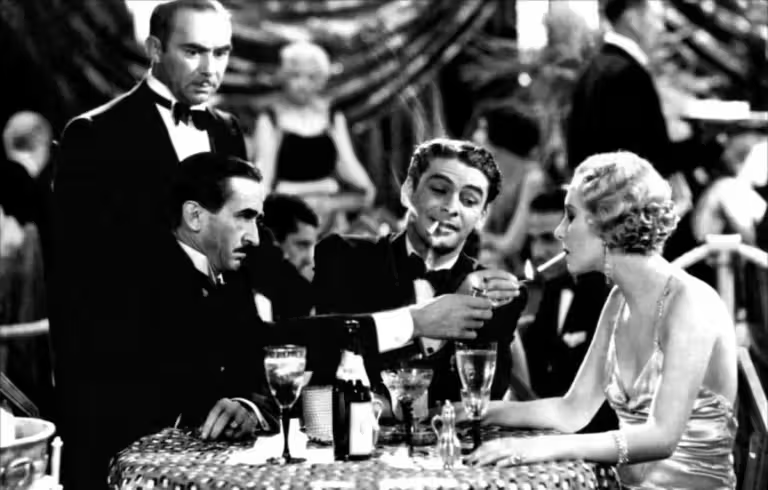
The codes of appearances tell the fall or rise of the gangster. It is sometimes wrong: they can die very well-dressed. Banquets are social rituals, as well as funerals.
In Little Caesar, once they killed someone they would attend his funerals very well dressed. Repression is a spectacle in a way: FBI and politics of prestige.
President Hoover used the media a lot: he collaborated with the media and the movie industry to create a positive image of the war on crime. The Kefauver hearings were televised for the first time. In a way, it was a show.
The cinema was the major medium to picture Organized Crime. Ten years later, TV would be a great threat to movies. Hearings were televised live: immediacy and power.
Organized Crime was in the streets and on the screens: dialectic between expression and repression. New forms of expression both in reality and in fiction.
When Hollywood involved censorship, it became an indirect form of expression but it was still depicting Organized Crime.
The image of America on screen is that of a country in which morality should impose images. Always new forms for gangsters on film even if censorship was present.