The Wallflowers photo

The Wallflowers

The Wallflowers

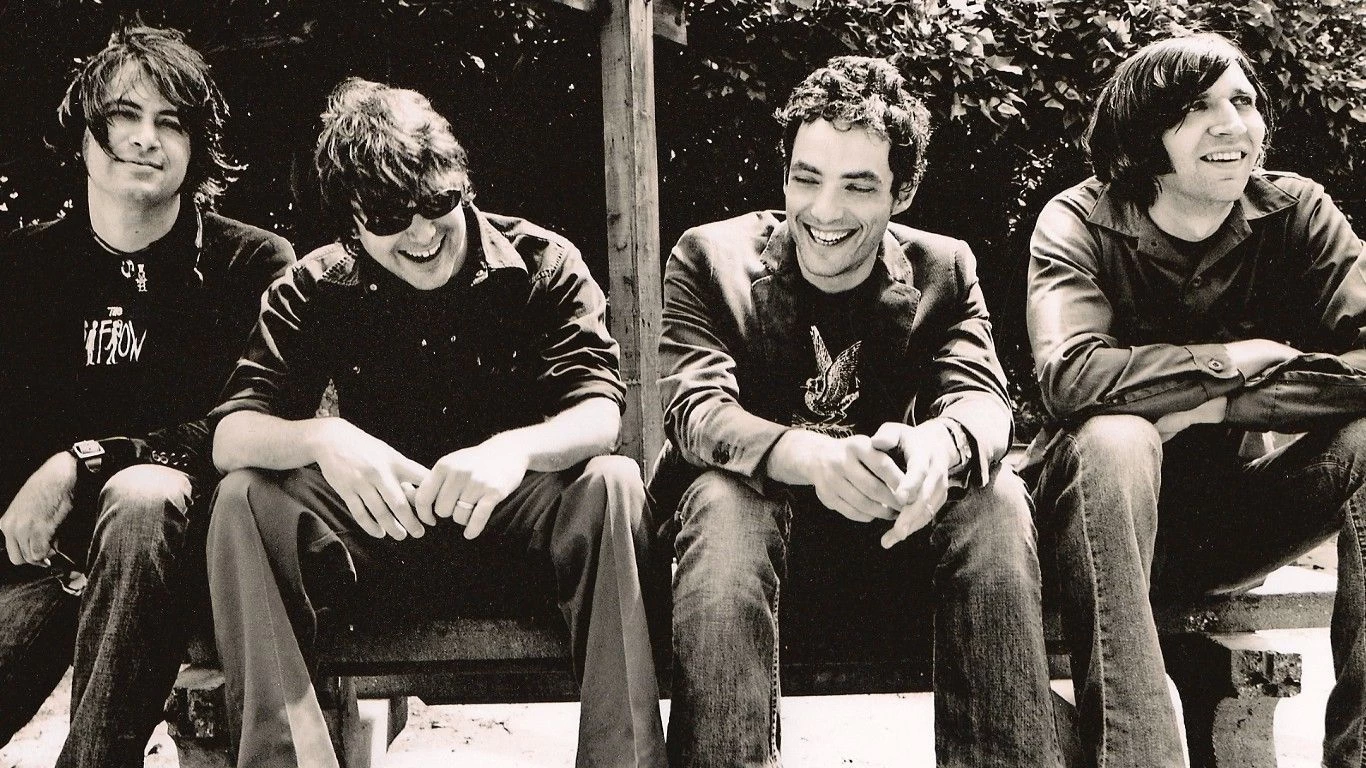
The Wallflowers is an American rock solo project of American singer-songwriter and multi-instrumentalist Jakob Dylan.

The Wallflowers were originally a roots rock band formed in Los Angeles in 1989 by Dylan and guitarist Tobi Miller. The band has gone through a number of personnel changes but has remained centered on Dylan.

After releasing their eponymous debut album in 1992, the Wallflowers released what would become their best-known and highest-selling album, Bringing Down the Horse (1996), which featured the songs “One Headlight” and “6th Avenue Heartache”.

Their next album, (Breach) (2000), would feature their first and only single—”Sleepwalker”, at number 76—to reach the Billboard Hot 100. “One Headlight” did not chart due to not being released as a single in the U.S.

The group later released an additional two albums before going on hiatus. In 2012, the Wallflowers reunited to release their sixth studio album, Glad All Over. Nearly ten years later they released their seventh studio album, Exit Wounds, in July 2021.

The Wallflowers have won two Grammy Awards: Best Rock Performance by a Duo or Group with Vocal and Best Rock Song for “One Headlight” in 1998. “One Headlight” is also listed at #58 in Rolling Stone’s list of the 100 Greatest Pop Songs.

The Wallflowers guitar tabs

Turin Brakes photo

Turin Brakes

Turin Brakes

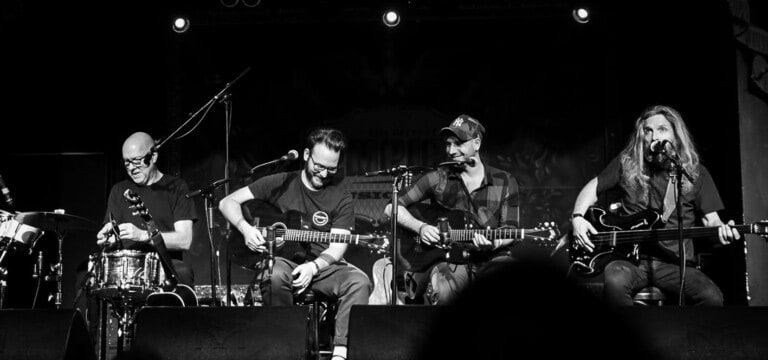
Turin Brakes are an English band, comprising original duo of Olly Knights and Gale Paridjanian, and long-term collaborators Rob Allum and Eddie Myer. They had a UK top 5 hit in 2003 with their song “Painkiller (Summer Rain)”.

The band was started by long-time friends Knights and Paridjanian. The two met at a young age and spent much of their childhood together, both receiving guitars as Christmas presents at the age of 10.

Although they split after Knights went to film school and Paridjanian attempted to form a band in Toronto, Ontario, Canada, they soon reunited and collaborated on what would later become their first EP, The Door, which was eventually released through Anvil Records in 1999 as a limited vinyl release. This led to the band attracting the attention of larger record labels.

Source Records would eventually release two more EPs, The State of Things EP and Fight or Flight, prompting NME to proclaim “Turin Brakes inhabit a space which is entirely their own, fully formed and brutally emotive… give them the devotion they deserve.”

Source reissued the song “The Door” before releasing their first album, The Optimist LP, in 2001. The album, which was released in the United States by Astralwerks, was greeted with critical praise, spawned several modestly successful UK singles, “Underdog (Save Me)” (reaching no. 39 in the UK Singles Charts), Mind Over Money (reaching no. 31) and “Emergency 72”, and received a nomination for the Mercury Music Prize.

In August 2001, the album was certified Gold by the British Phonographic Industry. A planned tour of the United States opening for the Stereophonics and Matthew Jay, was cancelled due to the September 11 terrorist attacks. Still, the band played at over 80 venues in Europe and the United States that year.

Turin Brakes have often been compared to many of the new acoustic movement bands spawned in the late 1990s such as Elbow, Starsailor, and the Norwegian band Kings of Convenience, whose 2001 album entitled Quiet Is the New Loud is a helpful indicator of the band’s first album.

With each record, Turin Brakes try to change their sound. While the first album features a lot of acoustic guitar, Ether Song featured more electric guitar and was, in total, a lot darker. The third album, Jackinabox, can be seen as a combination of the first two albums, with some funk influences.

While Dark on Fire featured a bigger sound produced by Ethan Johns, 2010’s Outbursts can be seen as a return to the sound of The Optimist LP. Turin Brakes formerly performed live as a five-piece outfit to achieve a full band sound, and were joined on stage (and often also in the studio) by Rob Allum (drums), Phil Marten (keyboards) and Eddie Myer (bass).

Following Marten’s departure, they now perform as a four-piece band, with Gale’s guitar playing being more prominent and more richly contributing to the live sound.

On 6 September 2012, all four Turin Brakes members played at a “Spirit of Talk Talk” evening at 229 Great Portland Street where they joined some former members of Talk Talk to play a few hits including It’s My Life, with the band then playing a set of their own afterwards.

Before playing the song “Painkiller” Gale announced to the audience that although it wouldn’t be obvious to most people the song was heavily influenced by Talk Talk and by the work they did with producer Phill Brown in the Kent countryside some years ago.

Turin Brakes guitar tabs

Traffic photo

Traffic

Traffic

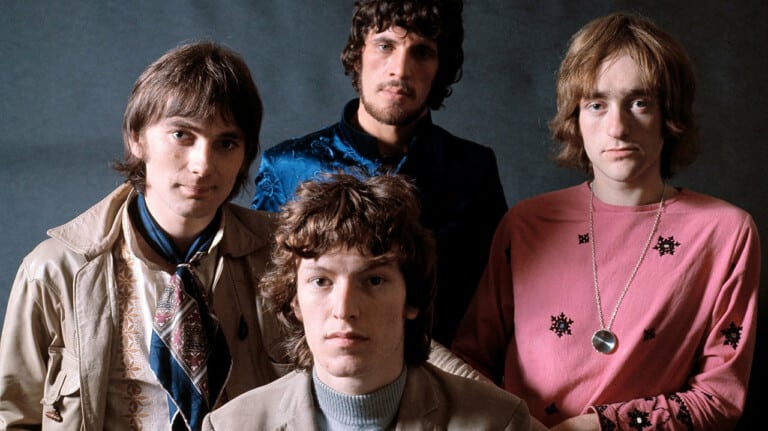
Traffic were an English rock band, formed in Birmingham, in April 1967 by Steve Winwood, Jim Capaldi, Chris Wood and Dave Mason.

They began as a psychedelic rock group and diversified their sound through the use of instruments such as keyboards, like the Mellotron and harpsichord, sitar, and various reed instruments, and by incorporating jazz and improvisational techniques in their music.

Initially, they released three non-album singles, including “Paper Sun”, “Hole in My Shoe”, and “Here We Go Round the Mulberry Bush” in early and mid 1967.

Their first full album Mr. Fantasy was released in December of that year, and while it was never released as a single, the track “Dear Mr. Fantasy” from the album became a signature song for the band.

Dave Mason quit the band shortly after the release of the first album. He rejoined briefly during the recording sessions for the band’s self-titled second album, but was in and out of the group at various times over the next several years.

The three-piece Traffic (with Mason appearing in limited capacity) released one more album, 1969’s Last Exit, which contained only one side of new studio material.

They disbanded in 1969 when Winwood co-founded the short-lived supergroup Blind Faith, with Eric Clapton, Ginger Baker, and Ric Grech. They then reunited in 1970 to release the album John Barleycorn Must Die, their highest charting album in the U.S.

In 1971, the band reshuffled the lineup for the album The Low Spark of High Heeled Boys, with Capaldi moving to secondary percussionist and backing vocalist as the band added drummer Jim Gordon, percussionist Rebop Kwaku Baah, and bassist Ric Grech to the official line-up.

For their next album, 1973’s Shoot Out at the Fantasy Factory, Gordon and Grech were replaced by members of the Muscle Shoals Rhythm Section, Roger Hawkins and David Hood respectively.

For their next studio album, 1974’s When the Eagle Flies, Capaldi had returned to the drum kit, bassist Rosko Gee had replaced Hood, and Rebop Kwaku Baah had left. The band broke up shortly thereafter.

A partial reunion, with Winwood and Capaldi alongside several new musicians, took place in 1994. In the intervening years Steve Winwood had a successful solo career, with several hit singles and albums during the 1980s.

Dave Mason had his own solo career that produced a few minor hit songs in the 1970s, played as a session musician with a number of bands, and was briefly a member of Fleetwood Mac in 1995 and Ringo Starr & His All Starr Band in 1997.

Jim Capaldi also had some minor solo hits in the 1970s in his native UK but was less successful abroad. During the 1990s, Capaldi primarily worked as a songwriter, working with Santana and The Eagles.

Chris Wood did sporadic session work after the breakup of Traffic in 1974, and died in 1983.

Traffic were inducted into the Rock and Roll Hall of Fame in 2004.

Traffic guitar tabs