
A Midsummer Night’s Dream is a comedy because its conflicts move from obstruction and confusion towards reconciliation, marriage and celebration. Shakespeare threatens his characters with forced marriage, abandonment, humiliation and violence, but he repeatedly diverts these dangers into romantic confusion, magical transformation, farce and theatrical play.
The play does more than make its audience laugh. It combines several comic traditions and allows each group of characters to generate a different form of humour. The lovers create romantic comedy, the fairies produce magical disorder, Bottom and the mechanicals introduce farce, and Pyramus and Thisbe turns tragedy itself into entertainment.
Shakespeare’s comedy nevertheless has a disturbing underside. Hermia faces death for disobeying her father, Hippolyta has been conquered in war, Titania is manipulated by Oberon, and Demetrius finishes the play under a magical spell. The comic ending contains these tensions without completely erasing them.
Readers unfamiliar with the plot can first consult the complete act-by-act synopsis of A Midsummer Night’s Dream. The following analysis focuses specifically on the mechanisms that make the play a comedy.

What makes a Shakespearean comedy?
A Shakespearean comedy cannot be defined only as a play containing jokes. Its identity depends largely on its dramatic movement. A social or romantic obstacle disrupts the opening situation, the characters enter a period of confusion, and the ending restores a workable form of order.
Marriage frequently completes this movement because it joins individuals while reintegrating them into society. Shakespeare’s comic endings therefore tend to feature weddings, reconciliations, feasts, dances or promises of fertility. Tragedy moves towards separation and death, whereas comedy usually moves towards survival and renewed community.
A Midsummer Night’s Dream follows this pattern clearly. It begins with an unwanted marriage, a threatened execution and several broken relationships. It ends with three weddings, the reconciliation of Oberon and Titania, a theatrical performance and a blessing upon the married couples.
The principal conventions of Shakespearean comedy
- young lovers prevented from marrying;
- conflicts between desire and social authority;
- mistakes, misunderstandings and changing relationships;
- a temporary departure from ordinary society;
- disguise, transformation or mistaken perception;
- several plots involving different social groups;
- dramatic irony, verbal humour and physical comedy;
- a final movement towards marriage and reconciliation.
Shakespeare uses almost all these conventions in the play. However, he does not simply arrange them mechanically. He connects romantic comedy with folklore, classical mythology, festive custom and reflection upon theatre itself.
Love begins as a potential tragedy
The opening scene creates circumstances that could support a tragedy. Hermia loves Lysander, but Egeus insists that she marry Demetrius. Theseus gives her a choice between obedience, death and a life of permanent chastity.
The threat is genuine within the world of the play. Hermia and Lysander cannot simply ignore Athenian law, so they decide to escape into the forest. Their attempt to marry against parental authority resembles the structure of a tragic forbidden-love narrative.
“The course of true love never did run smooth.”
Lysander, Act I, Scene 1
Lysander’s observation describes both the danger and the comic engine of the story. Love cannot proceed directly towards marriage. It must encounter resistance, misunderstanding and apparent failure before comedy can produce its resolution.
The lovers’ flight could end in punishment or death. Instead, their entrance into the forest transforms legal danger into comic disorder. Shakespeare keeps the possibility of tragedy visible, but he repeatedly postpones and redirects it.

Romantic comedy and the instability of love
The four lovers form the central romantic comedy. At first, Hermia and Lysander love each other, Helena loves Demetrius, and Demetrius pursues Hermia. The magical flower then rearranges these relationships with almost mathematical precision.
Puck mistakenly enchants Lysander, who abandons Hermia and begins pursuing Helena. Oberon later enchants Demetrius, causing both men to desire the same woman. Hermia, who was initially pursued by two men, suddenly finds herself rejected by both.
This reversal is comic because the audience understands its cause while the lovers do not. Helena assumes that the men are mocking her. Hermia believes that Helena has stolen Lysander, while Lysander and Demetrius treat their magically manufactured desires as completely sincere.
The love potion makes an abstract idea physically visible: romantic desire can be irrational, unstable and dependent upon perception. Shakespeare literalises the familiar claim that love is blind. The characters’ emotions change because their eyes have been altered rather than because they have acquired new knowledge.
“Lord, what fools these mortals be!”
Puck, Act III, Scene 2
Puck’s comment establishes a comic distance between the audience and the lovers. From his perspective, their declarations, quarrels and threats appear absurd. Yet magic exaggerates tendencies that already existed in Athens, where love was possessive, unequal and poorly understood.
Dramatic irony makes the confusion comic
Dramatic irony occurs when the audience knows more than the characters. It is essential to the comedy of the lovers because the audience sees Puck apply the potion to the wrong man. Viewers therefore understand why Lysander’s behaviour changes so suddenly.
Helena and Hermia lack this information. They search for rational explanations and interpret the enchanted behaviour as betrayal or cruelty. Their increasingly desperate conclusions remain plausible to them but absurd to the audience.
This superiority protects the audience from experiencing the scenes as pure distress. Lysander’s rejection hurts Hermia, while Helena genuinely believes that her friends are humiliating her. However, viewers know that the situation can be reversed because its cause is external and temporary.
The same mechanism operates in the Titania and Bottom plot. The audience understands the potion and Puck’s transformation, whereas Titania sees Bottom as an ideal lover. The gap between her perception and the visible reality produces comic incongruity.
A Midsummer Night’s Dream as a festive comedy
Critics frequently describe A Midsummer Night’s Dream as a festive comedy. The term refers to a dramatic structure shaped by holiday, communal celebration and temporary freedom from ordinary rules. The play begins before a wedding and ends with marriage, entertainment, dancing and supernatural blessing.
The movement from Athens to the forest resembles a movement from ordinary time into holiday time. Athens represents daylight, law, hierarchy and paternal authority. The forest represents night, imagination, transformation and unstable identity.
This opposition also structures the dramatic movement of A Midsummer Night’s Dream. The characters leave the ordered city, pass through the disorder of the forest and return to Athens after dawn. The forest acts as a comic interval within social life.
The forest suspends ordinary rules
Inside the forest, stable distinctions begin to collapse. Lovers change partners, a human receives an animal’s head, a fairy queen desires a weaver, and invisible spirits manipulate mortal behaviour. Darkness prevents the characters from seeing either their surroundings or themselves clearly.
The forest therefore permits experiences that Athens could not accommodate. Hermia defies her father, Helena pursues a man who rejects her, and Titania temporarily abandons her royal dignity. These violations become acceptable within the comic framework because they belong to a limited period of nocturnal misrule.
The play draws upon traditions associated with May celebrations, midsummer customs, fairy folklore and seasonal renewal. These influences contribute to its atmosphere of fertility, magic and collective festivity. They are examined more fully in the historical and folkloric background of A Midsummer Night’s Dream.
Misrule eventually produces renewal
Festive disorder does not destroy society permanently. Instead, it exposes tensions that Athens had failed to resolve. Egeus’s command, Demetrius’s rejection of Helena and the quarrel between Oberon and Titania all become visible through exaggerated comic forms.
When morning arrives, the characters do not return to the exact opening situation. Theseus overrules Egeus, Hermia marries Lysander, and Helena receives Demetrius’s affection. The experience of disorder makes a different social arrangement possible.
Comedy therefore restores order through change rather than simple repetition. The law remains, but it no longer forces Hermia into an unwanted marriage. The forest has temporarily challenged authority and allowed the comic ending to revise it.
Social inversion and the comedy of Titania and Bottom
Titania and Bottom create the play’s most spectacular social inversion. Titania is an immortal queen surrounded by fairies. Bottom is an ordinary Athenian weaver whose theatrical confidence greatly exceeds his ability.
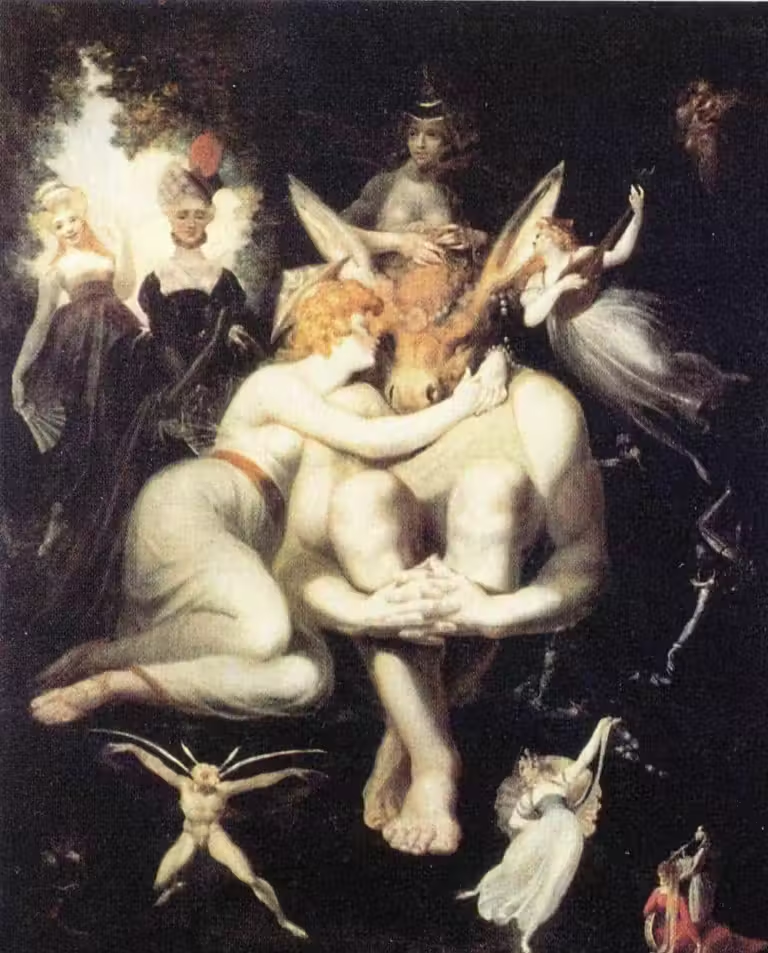
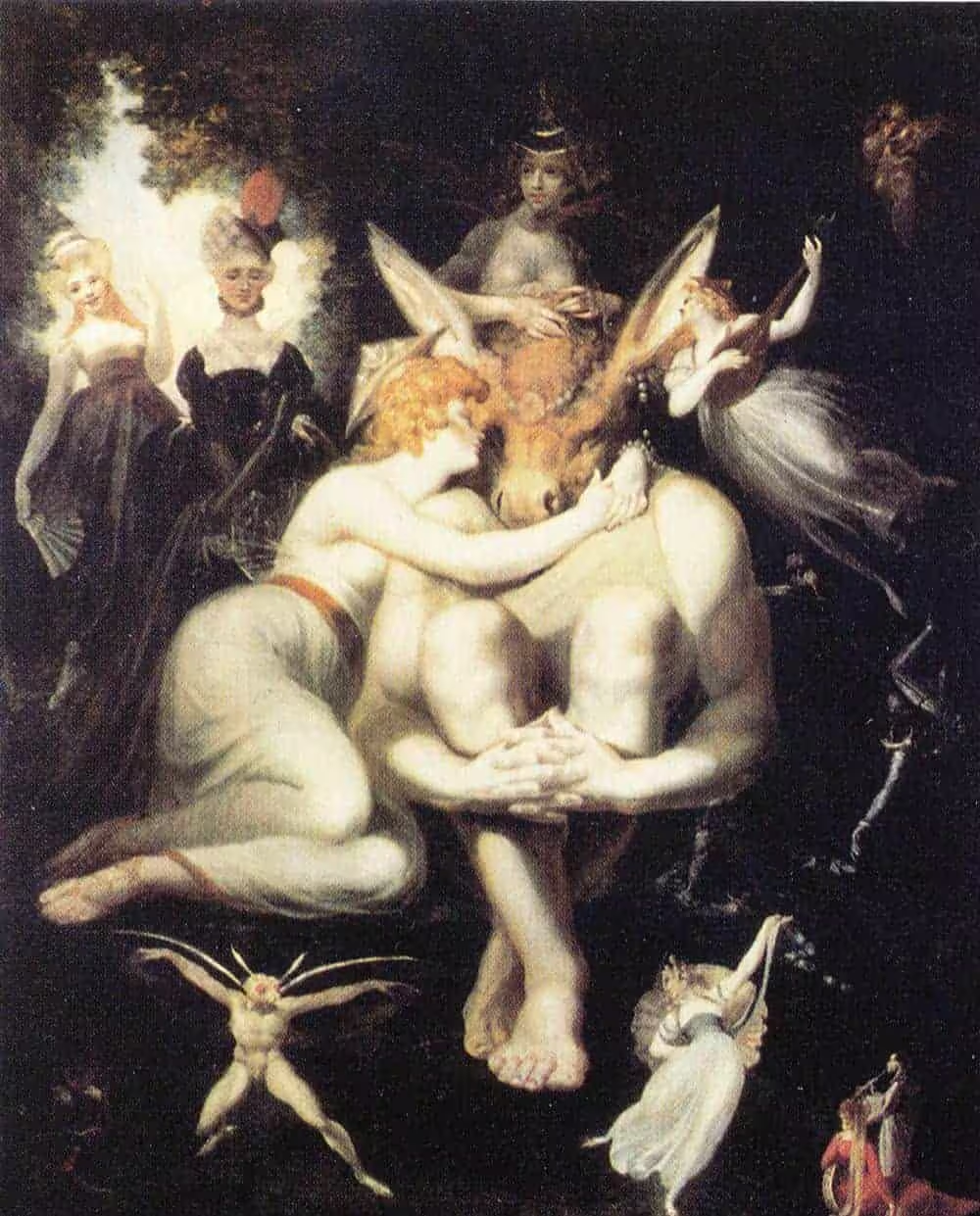
Puck gives Bottom the head of a donkey shortly before Titania wakes under the love spell. She immediately treats him as an object of extraordinary beauty. The visual contrast between her elevated language and Bottom’s appearance creates comic incongruity.
The humour does not depend only upon the donkey’s head. Titania addresses Bottom with poetic intensity, while he remains preoccupied with food, sleep and having his head scratched. Her idealising language cannot transform his practical and bodily concerns.
The episode reverses several hierarchies at once. A queen serves a craftsman, an immortal adores a mortal, elegance embraces animality, and refined poetry surrounds mundane appetite. The apparently incompatible elements become temporarily united through magic.
However, the scene also has a cruel dimension. Oberon engineers Titania’s humiliation so that he can obtain the Indian boy. Her comic degradation forms part of a struggle over authority, possession and consent rather than an innocent romantic adventure.
Bottom and the traditions of low comedy
Bottom introduces what is often called low comedy. In literary criticism, the term describes humour based upon the body, physical action, verbal mistakes, exaggerated confidence and socially ordinary characters. It does not mean that the comedy lacks artistic sophistication.
Bottom is funny because he possesses almost complete confidence without corresponding self-knowledge. During the casting of Pyramus and Thisbe, he wants to play Pyramus, Thisbe and the lion. He imagines himself capable of every theatrical style and emotional effect.
His language also produces comedy. Bottom and the other mechanicals misuse words, confuse meanings and speak in awkward rhetorical patterns. Their attempts to sound educated or theatrical reveal the gap between their ambition and their competence.
Yet Bottom is not merely an object of contempt. He remains adaptable, sociable and strangely fearless. When his companions flee from his transformed appearance, he assumes they are trying to frighten him and begins singing.
He also accepts Titania’s supernatural world with remarkable ease. Other characters become distressed when reality changes, but Bottom requests food and makes conversation with the fairies. His practical resilience allows him to survive an experience that might terrify a more self-conscious character.
The mechanicals create affectionate satire
Peter Quince, Bottom, Flute, Snug, Snout and Starveling hope to honour Theseus through a theatrical performance. Their sincerity makes them sympathetic, but their lack of experience turns every production decision into comedy.
They worry that the audience might believe the lion is real or think that Pyramus has actually died. Their proposed solution is to explain every illusion before it occurs. The lion must introduce himself as an actor, while a man must announce that he represents a wall.
This anxiety reverses the normal relationship between theatre and imagination. Effective theatre asks spectators to participate willingly in an illusion. The mechanicals destroy that illusion because they do not trust their audience to distinguish representation from reality.
Shakespeare satirises bad acting, excessive explanation and misplaced theatrical ambition. Nevertheless, the satire remains affectionate. The mechanicals work hard, risk embarrassment and create genuine pleasure during the wedding celebrations.
Pyramus and Thisbe turns tragedy into farce
The performance of Pyramus and Thisbe creates a play within the play. Its story concerns two young lovers whose families prevent them from marrying. After a fatal misunderstanding, both characters kill themselves.
The story therefore mirrors the danger faced by Hermia and Lysander. They also defy social authority, arrange a secret meeting and risk losing their lives. However, Shakespeare places the tragic version of their story inside a comedy after the real lovers have escaped disaster.
The mechanicals convert tragedy into farce through poor timing, broken illusion and exaggerated acting. Bottom prolongs Pyramus’s death, Flute overstates Thisbe’s grief, and the actors repeatedly interrupt the narrative to explain their props.
The courtly audience contributes another comic level by commenting throughout the performance. Theseus, Hippolyta, Lysander and Demetrius become spectators within Shakespeare’s play. The real theatre audience watches fictional spectators watching fictional actors.
This layered structure turns theatrical failure into theatrical success. The mechanicals fail to create convincing tragedy, but they succeed in entertaining both the Athenian court and Shakespeare’s audience. Their mistakes become the true performance.
Metatheatre and the comedy of performance
Metatheatre occurs when a play draws attention to its own theatrical nature. A Midsummer Night’s Dream repeatedly asks what audiences believe, how actors create illusion and where performance ends and reality begins.
The mechanicals discuss casting, rehearsal, scenery, costume and audience reaction. Their conversations expose the practical construction of theatre. At the same time, Puck’s magic creates another form of performance by assigning new appearances and emotional roles to the characters.
Lysander performs the role of Helena’s lover because the potion has rewritten his desire. Bottom plays Pyramus on stage after unknowingly playing Titania’s beloved in the forest. The play repeatedly presents identity as something that can be assumed, imposed or altered.
Theseus and Hippolyta mirror the external audience when they watch Pyramus and Thisbe. Finally, Puck addresses the spectators directly and suggests that the entire play may have been a dream. The epilogue makes the audience part of the comic resolution.
Language, repetition and comic exaggeration
Shakespeare’s comedy also depends upon language. The lovers speak in balanced verse, repeated accusations and increasingly competitive declarations. Their symmetrical language reinforces the impression that they are exchanging positions within a carefully organised comic pattern.
Helena and Hermia’s argument grows comic through repetition and escalation. The women move from emotional betrayal to insults about height, while Lysander and Demetrius repeatedly challenge each other. Serious romantic language deteriorates into an undignified quarrel.
Bottom’s speech creates a different effect. His mistakes often result from ambitious attempts to use sophisticated vocabulary. He reaches for elevated language but produces unintended meanings, making the discrepancy between intention and expression visible.
Exaggeration similarly shapes the performance of Pyramus and Thisbe. Death speeches last too long, emotions become excessive and every theatrical effect receives an unnecessary explanation. The tragedy becomes funny because it exceeds all proportion.
The comedy is collective rather than individual
No single character controls all the comedy. Puck creates much of the confusion, but he does not invent the lovers’ existing conflicts. Oberon directs the enchantments, yet he also depends upon Puck and fails to anticipate every consequence.
The play instead brings together four social and dramatic groups: the court, the lovers, the fairies and the mechanicals. Each group initially follows its own plot. Their encounters in the forest gradually connect political authority, romantic desire, supernatural power and theatrical ambition.
This collective design gives the play unusual variety. Romantic distress can immediately give way to fairy poetry or mechanical farce. Shakespeare changes comic register without abandoning the larger movement towards celebration.
The relationships between these groups are analysed further in the article on the characters, plots and structural levels of A Midsummer Night’s Dream.
The darker side of the comedy
Calling the play a comedy does not make every event harmless. The opening law grants Egeus disturbing power over Hermia’s future. Theseus’s relationship with Hippolyta also begins in military conquest rather than equal romantic courtship.
Oberon manipulates Titania’s perception and humiliates her to obtain the Indian boy. Puck treats the lovers’ distress as entertainment, while the men threaten violence against one another. Helena and Hermia experience rejection and humiliation before order returns.
The resolution also remains imperfect because Demetrius continues to love Helena under the potion’s influence. Lysander receives the antidote, but Demetrius does not. His marriage therefore raises an unresolved question about the authenticity of comic harmony.
These darker elements do not transform the play into a tragedy. Instead, they complicate its comedy by showing the power relationships beneath romance and festivity. The audience can enjoy the resolution while recognising that magical order has its own forms of coercion.
Why does the ending confirm the play as a comedy?
The ending brings the characters back from the forest and reintegrates them into Athenian society. Theseus permits Hermia to marry Lysander, while Helena is paired with Demetrius. The lovers who approached violence now participate in a shared wedding ceremony.
Oberon and Titania have also reconciled. Their reunion restores harmony within the fairy world and ends the natural disturbances caused by their quarrel. Human marriage and supernatural reconciliation therefore reinforce each other.
The mechanicals’ play prevents the final act from becoming a purely formal ceremony. Their performance introduces laughter, participation and social contact between rulers and craftsmen. Theseus may occupy the highest social position, but the mechanicals provide the evening’s entertainment.
After the mortals leave, the fairies bless the palace, the marriages and the couples’ future children. Fertility replaces death, while communal celebration replaces the isolation threatened in the opening act. These are defining signs of comic closure.
Puck’s epilogue completes the movement by asking the audience for forgiveness and applause. The spectators become the final community whose approval allows the comedy to end. The play closes not with certainty, but with an invitation to treat its transformations as a shared dream.
Comic forms in A Midsummer Night’s Dream
| Comic form | Example in the play | Comic effect |
|---|---|---|
| Romantic comedy | The changing relationships between Hermia, Helena, Lysander and Demetrius | Love becomes unstable, irrational and reversible |
| Festive comedy | The journey from Athens into the forest and back | Ordinary rules are suspended before society is renewed |
| Dramatic irony | The audience knows that Puck enchanted the wrong lover | Viewers understand confusion that the characters cannot explain |
| Social inversion | Titania falls in love with the donkey-headed Bottom | Royalty, humanity, animality and social rank become absurdly mixed |
| Low comedy | Bottom’s confidence, appetite, transformation and verbal mistakes | Bodily humour and linguistic error challenge elevated romance |
| Farce | The mechanicals’ performance of Pyramus and Thisbe | Exaggeration and failed illusion transform death into laughter |
| Metatheatre | The play within the play and Puck’s direct address | The audience becomes conscious of acting, illusion and spectatorship |
| Comic resolution | Three weddings, reconciliation and the fairies’ blessing | Conflict gives way to social reintegration and renewal |
Is A Midsummer Night’s Dream only a comedy?
A Midsummer Night’s Dream belongs unmistakably to comedy, but it constantly approaches other genres. The lovers’ story could become a tragedy, the fairy world contains menace, and the opening court presents serious questions about authority and female autonomy.
Shakespeare incorporates these darker possibilities rather than excluding them. Comedy becomes powerful because the audience can see what might have happened. Marriage matters because the lovers faced separation, while laughter matters because the play repeatedly approached violence and grief.
The play is therefore not comic because nothing serious occurs. It is comic because theatrical imagination transforms danger without pretending that danger never existed. Disorder is experienced, displayed and finally reshaped into a fragile but celebratory harmony.
Frequently asked questions
Why is A Midsummer Night’s Dream classified as a comedy?
The play follows the structure of a Shakespearean comedy. Young lovers face social obstruction, enter a period of confusion and finally marry. Reconciliation, performance, dancing and the fairies’ blessing replace the threats of death, rejection and conflict introduced earlier.
Is A Midsummer Night’s Dream a romantic comedy?
Yes, although it is not only a romantic comedy. Much of the plot concerns young lovers overcoming obstacles before marriage. However, Shakespeare also incorporates festive comedy, fairy magic, farce, social satire and a play within the play.
Why is the play called a festive comedy?
The story is organised around weddings, seasonal imagery, music, dancing and a temporary departure from ordinary society. The forest acts as a holiday space where rules become unstable before the characters return to the city and form a renewed community.
What makes Bottom a comic character?
Bottom combines enormous confidence with limited self-awareness. He wants to play every role, misuses language and remains unaware of his donkey’s head. His ordinary concerns also contrast sharply with Titania’s elevated poetry and supernatural status.
How does dramatic irony create comedy?
The audience knows that Puck has enchanted Lysander by mistake, but the lovers do not. Viewers understand why the relationships have changed and expect the error to be corrected. This knowledge creates comic distance from the characters’ confusion.
Why is Pyramus and Thisbe important?
The mechanicals’ play presents a tragic version of forbidden love that parallels the experience of Hermia and Lysander. Its poor acting and broken theatrical illusion transform death into farce. It also allows Shakespeare to examine theatre itself.
Does the play have a dark side?
Yes. The play includes forced marriage, threatened death, military conquest, magical manipulation and humiliation. Demetrius also remains enchanted at the end. These tensions complicate the comedy without changing its final movement towards reconciliation and celebration.
How does A Midsummer Night’s Dream end?
Theseus marries Hippolyta, Hermia marries Lysander, and Helena marries Demetrius. The mechanicals perform Pyramus and Thisbe, Oberon and Titania bless the palace, and Puck asks the audience to remember the performance as a dream.
Continue studying A Midsummer Night’s Dream
Follow the complete SkyMinds study guide to explore the plot, sources, dramatic structure, characters, magical forest and historical background of Shakespeare’s comedy.
Sources and further reading
- Folger Shakespeare Library: complete text of A Midsummer Night’s Dream
- Folger Shakespeare Library: a modern critical perspective
- Folger Shakespeare Library: scholarship and further reading
- Royal Shakespeare Company: learning resources
- Royal Shakespeare Company: language analysis
- Shakespeare’s Globe: play, themes and context
- Kunsthaus Zürich: Titania, Bottom and the Fairies by Henry Fuseli
