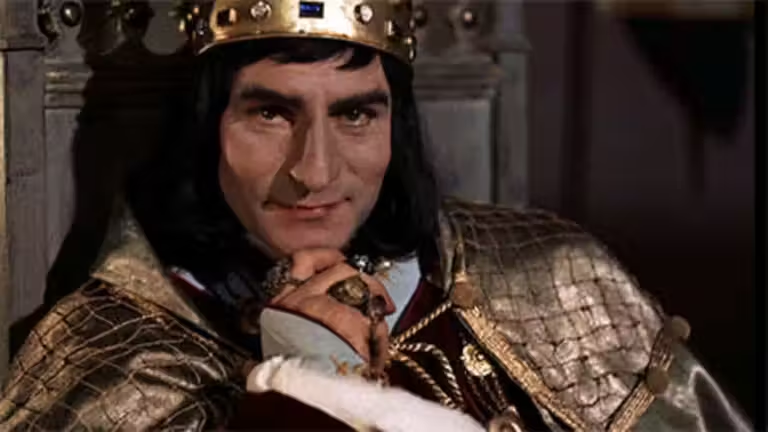
Richard III : the ambiguity of Richard's evil photo

Richard III : Order and Disorder, the Elizabethan problem

  1. Richard III: the ambiguity of Richard’s evil
  2. Richard III : Order and Disorder, the Elizabethan problem

It is very often an issue in Shakespeare’s plays. It deals with order and degree: each thing in the Universe has a place in a scale of things.

It is more than a political doctrine: it implies a metaphysical organization of the Universe, which is also linked with theology. We cannot find an exponent of this doctrine, it is everywhere at the back of people’s minds. It is a world picture in the collective unconscious consciousness.

Disorder is the equivalent of the original chaos (as opposed to the cosmos). God sustains the world as ordered, holding everything into place: he did not create it once and for all.

Order is how you can judge disorder. The notion of sin also intervenes, at several levels (in the Bible…) :

  1. Revolt of the Bad Angels with Satan
  2. Fall of Man from the Garden of Eden
  3. The murder of Abel by Cain

It constitutes frames of reference for the Elizabethan. Sin is the reason for chaos and disorder. The ordering of the world is very complex and means a very specific organization. Everything has a place, even the slightest one.

They conceived the world as a scale, an infinite ladder with infinite degrees: each thing is both superior and inferior to something else. It is a hierarchical order of things, known as « The Great Chain of Beings ».
Lire Richard III : Order and Disorder, the Elizabethan problem

Richard III : the ambiguity of Richard's evil photo

Richard III: the ambiguity of Richard’s evil

  1. Richard III: the ambiguity of Richard’s evil
  2. Richard III : Order and Disorder, the Elizabethan problem

I. The Vice

The Vice was the favourite character in medieval morality plays. He is both an intriguer and a deceiver. He creates laughter and engages the audience’s sympathy in a conspirational relationship.

Richard generates a special relation between word and deed. He tells the audience what he is going to do, then does it, and finally recalls what he did: his soliloquies and asides create a feeling of conspiracy.

The Vice is also a figure of carnival, who fights the established authority and embodies the audience’s anti-authoritarian impulses. He is an outlet for the people’s frustration.

II. A Monster

Shakespeare has added a physical deformity to the character of Richard because Richard was not a hunchback.

In fact, at that time, deformed people were said to be willing to take revenge against Nature: because they could not change their lot, they wanted to bring people down.

Another reason is that showing fairground attractions on stage was a trick often used by Shakespeare to incite people to see his plays. A character both deformed and mobile was a very scary monster.

Lire Richard III: the ambiguity of Richard’s evil

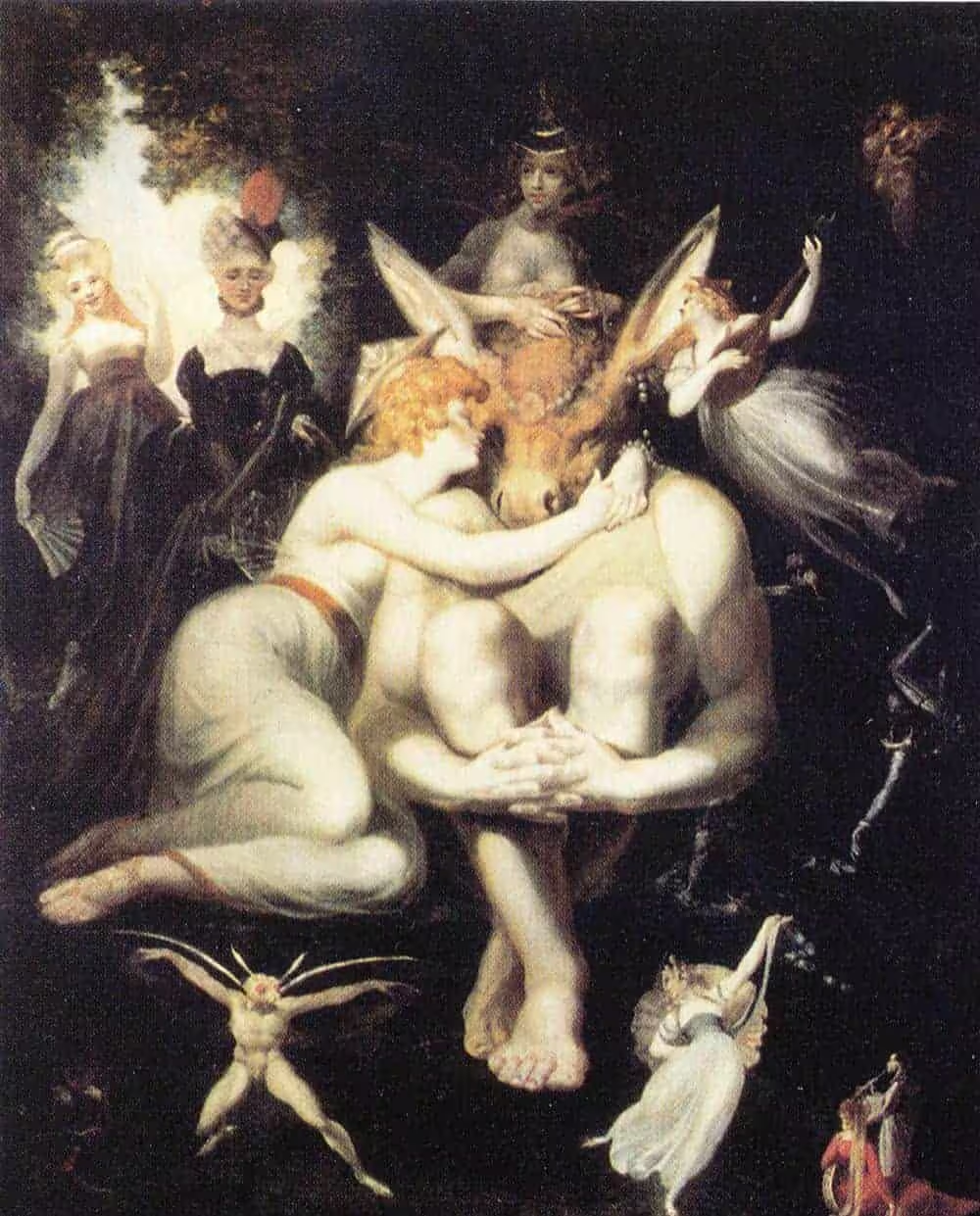
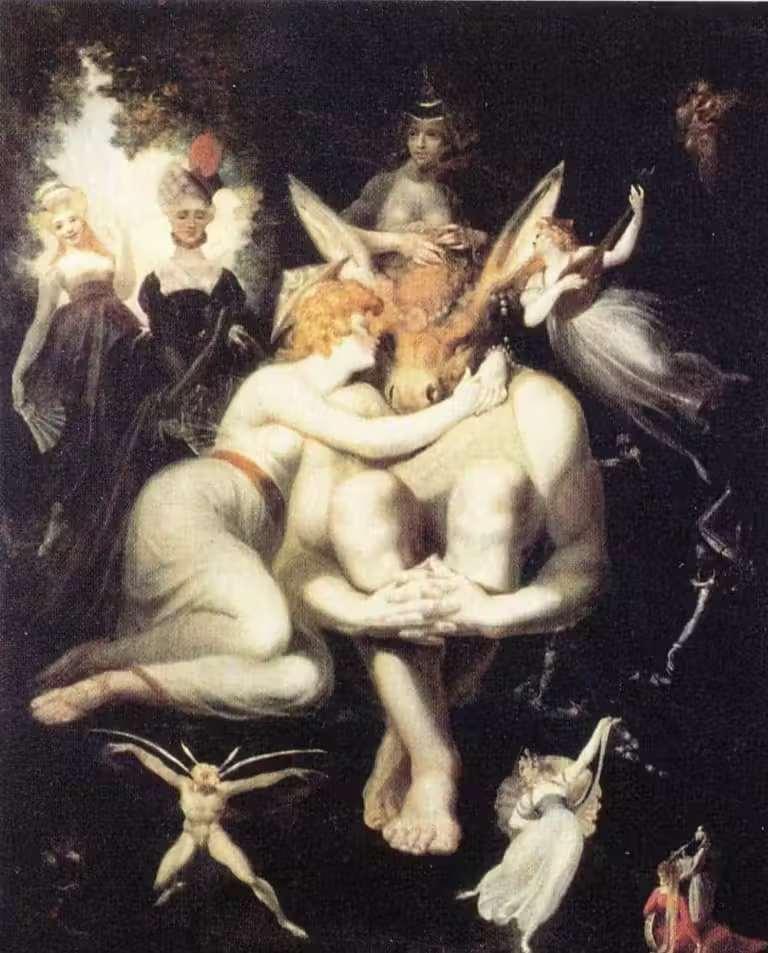
Un groupe de fées entoure un couple rayonnant ; la femme enlace un personnage assis à la tête d’âne. Des silhouettes éthérées flottent et dansent autour d’eux dans un décor de forêt sombre et magique. L’atmosphère est mystique et envoûtante, évoquant un monde fantastique onirique inspiré du « Songe d’une nuit d’été » de Shakespeare et de son mélange fantaisiste de comédie et d’enchantement.

Why Is A Midsummer Night’s Dream a Comedy?

  1. A Midsummer Night’s Dream: Introduction and Context
  2. Background of A Midsummer Night’s Dream: Myth, Folklore and Festivity
  3. Structure in A Midsummer Night’s Dream: Plots and Patterns
  4. Why Is A Midsummer Night’s Dream a Comedy?
  5. A Midsummer Night’s Dream: Complete Act-by-Act Synopsis

A Midsummer Night’s Dream is a comedy because its conflicts move from obstruction and confusion towards reconciliation, marriage and celebration. Shakespeare threatens his characters with forced marriage, abandonment, humiliation and violence, but he repeatedly diverts these dangers into romantic confusion, magical transformation, farce and theatrical play.

The play does more than make its audience laugh. It combines several comic traditions and allows each group of characters to generate a different form of humour. The lovers create romantic comedy, the fairies produce magical disorder, Bottom and the mechanicals introduce farce, and Pyramus and Thisbe turns tragedy itself into entertainment.

Shakespeare’s comedy nevertheless has a disturbing underside. Hermia faces death for disobeying her father, Hippolyta has been conquered in war, Titania is manipulated by Oberon, and Demetrius finishes the play under a magical spell. The comic ending contains these tensions without completely erasing them.

Readers unfamiliar with the plot can first consult the complete act-by-act synopsis of A Midsummer Night’s Dream. The following analysis focuses specifically on the mechanisms that make the play a comedy.

What makes a Shakespearean comedy?

A Shakespearean comedy cannot be defined only as a play containing jokes. Its identity depends largely on its dramatic movement. A social or romantic obstacle disrupts the opening situation, the characters enter a period of confusion, and the ending restores a workable form of order.

Marriage frequently completes this movement because it joins individuals while reintegrating them into society. Shakespeare’s comic endings therefore tend to feature weddings, reconciliations, feasts, dances or promises of fertility. Tragedy moves towards separation and death, whereas comedy usually moves towards survival and renewed community.

A Midsummer Night’s Dream follows this pattern clearly. It begins with an unwanted marriage, a threatened execution and several broken relationships. It ends with three weddings, the reconciliation of Oberon and Titania, a theatrical performance and a blessing upon the married couples.

Lire Why Is A Midsummer Night’s Dream a Comedy?