The Vice was the favourite character in medieval morality plays. He is both an intriguer and a deceiver. He creates laughter and engages the audience’s sympathy in a conspirational relationship.
Richard generates a special relation between word and deed. He tells the audience what he is going to do, then does it, and finally recalls what he did: his soliloquies and asides create a feeling of conspiracy.
The Vice is also a figure of carnival, who fights the established authority and embodies the audience’s anti-authoritarian impulses. He is an outlet for the people’s frustration.
II. A Monster
Shakespeare has added a physical deformity to the character of Richard because Richard was not a hunchback.
In fact, at that time, deformed people were said to be willing to take revenge against Nature: because they could not change their lot, they wanted to bring people down.
Another reason is that showing fairground attractions on stage was a trick often used by Shakespeare to incite people to see his plays. A character both deformed and mobile was a very scary monster.
A Midsummer Night’s Dream is a comedy because its conflicts move from obstruction and confusion towards reconciliation, marriage and celebration. Shakespeare threatens his characters with forced marriage, abandonment, humiliation and violence, but he repeatedly diverts these dangers into romantic confusion, magical transformation, farce and theatrical play.
The play does more than make its audience laugh. It combines several comic traditions and allows each group of characters to generate a different form of humour. The lovers create romantic comedy, the fairies produce magical disorder, Bottom and the mechanicals introduce farce, and Pyramus and Thisbe turns tragedy itself into entertainment.
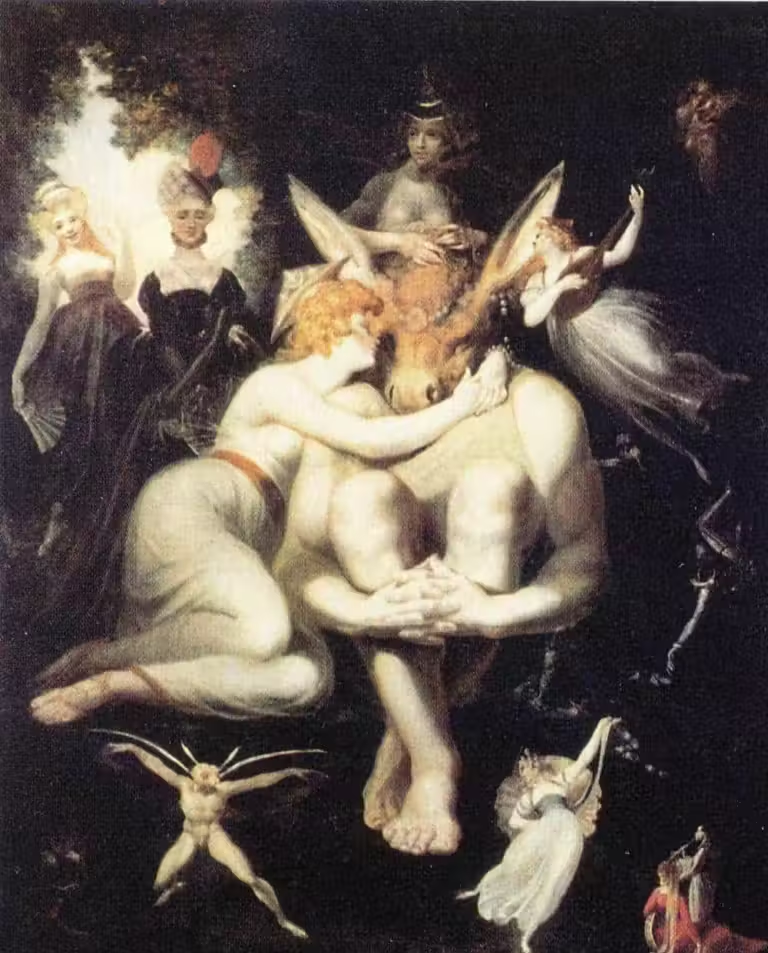
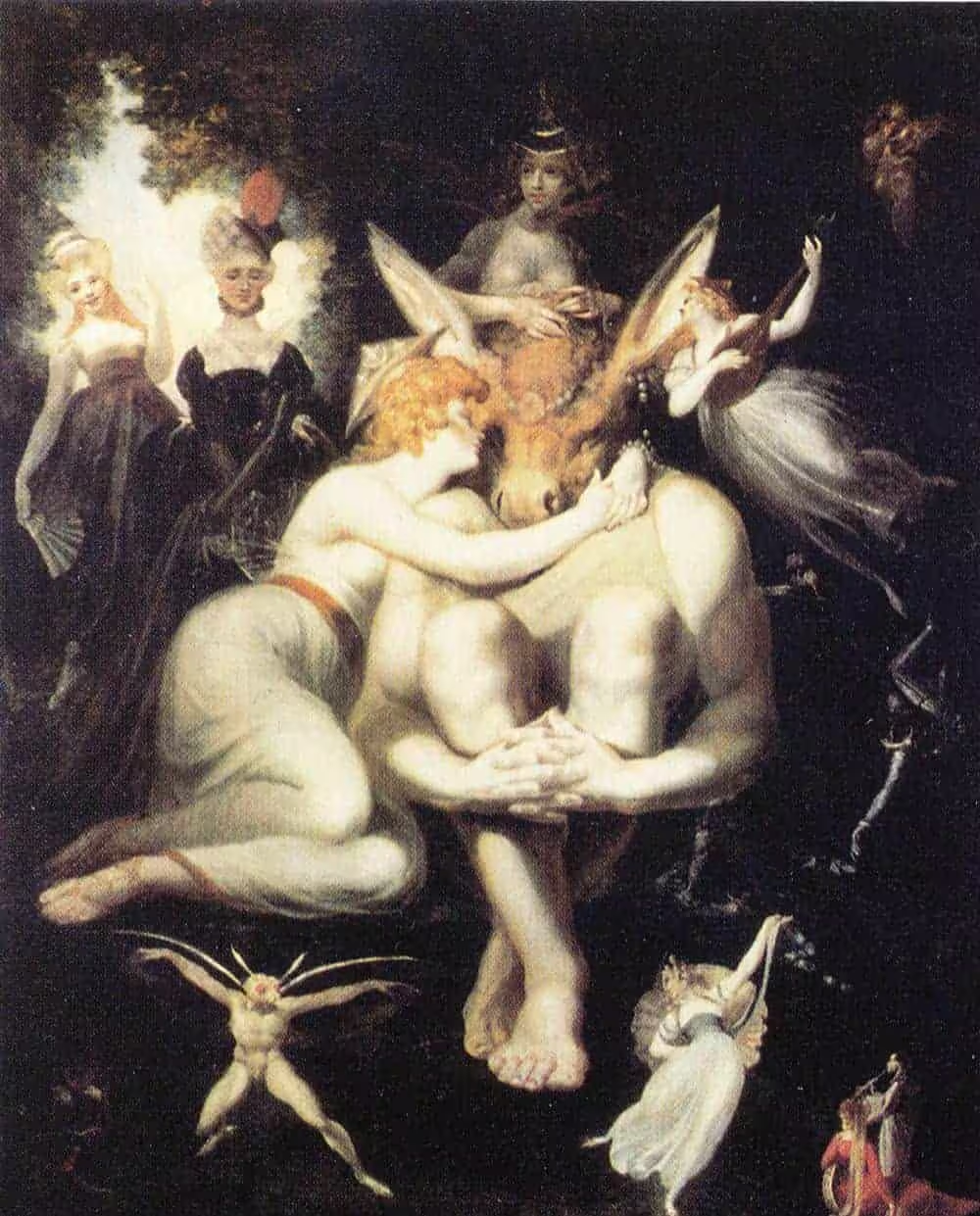
Titania, Bottom and the Fairies, Johann Heinrich Füssli, 1793–1794, Kunsthaus Zürich.
Shakespeare’s comedy nevertheless has a disturbing underside. Hermia faces death for disobeying her father, Hippolyta has been conquered in war, Titania is manipulated by Oberon, and Demetrius finishes the play under a magical spell. The comic ending contains these tensions without completely erasing them.
A Shakespearean comedy cannot be defined only as a play containing jokes. Its identity depends largely on its dramatic movement. A social or romantic obstacle disrupts the opening situation, the characters enter a period of confusion, and the ending restores a workable form of order.
Marriage frequently completes this movement because it joins individuals while reintegrating them into society. Shakespeare’s comic endings therefore tend to feature weddings, reconciliations, feasts, dances or promises of fertility. Tragedy moves towards separation and death, whereas comedy usually moves towards survival and renewed community.
A Midsummer Night’s Dream follows this pattern clearly. It begins with an unwanted marriage, a threatened execution and several broken relationships. It ends with three weddings, the reconciliation of Oberon and Titania, a theatrical performance and a blessing upon the married couples.
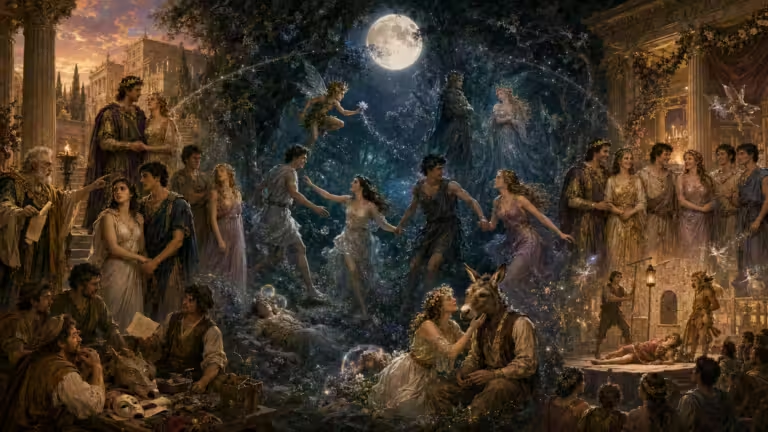
The structure of A Midsummer Night’s Dream brings together four dramatic worlds: the Athenian court, the young lovers, the mechanicals and the fairies. Shakespeare first presents these groups separately, sends them into the same forest, and then reunites them through marriage, performance and supernatural blessing.
Beneath the play’s apparent confusion lies an exceptionally controlled design. Its action moves from legal obstruction in Athens to emotional and magical disorder in the forest. It then returns to the city, where the events of the night are transformed into marriage, memory and theatre.
The conclusion does not merely restore the opening situation. Hermia escapes the marriage imposed by her father, Demetrius remains under the influence of magic, and the fairies enter the palace after the human characters retire. Shakespeare produces comic order, but he also preserves uncertainty.
The structure of A Midsummer Night’s Dream at a glance
The play contains five acts and nine scenes. However, its deeper structure depends less upon the conventional act divisions than upon changes of place, time, character grouping and dramatic control.
Structural element
Beginning
Middle
Ending
Place
Athens
The forest outside Athens
Athens and the ducal palace
Time
Day and approaching evening
Night, sleep and dream
Dawn, wedding celebrations and night
Social condition
Law, hierarchy and obstruction
Misrule, transformation and confusion
Marriage, performance and qualified harmony
Lovers
Unequal romantic relationships
Magically rearranged desires
Two recognised couples
Fairies
Initially absent from Athens
Control much of the action
Enter and bless the palace
Mechanicals
Plan their production
Rehearse and encounter magic
Perform before the court
Theatre
A future wedding entertainment
Rehearsal and involuntary performance
Pyramus and Thisbe and Puck’s epilogue
This pattern is often summarised as a movement from society into a “green world” and back. Yet Shakespeare complicates that model. Athens changes after the forest experience, while the fairies cross the apparent boundary and occupy the palace during the final scene.