
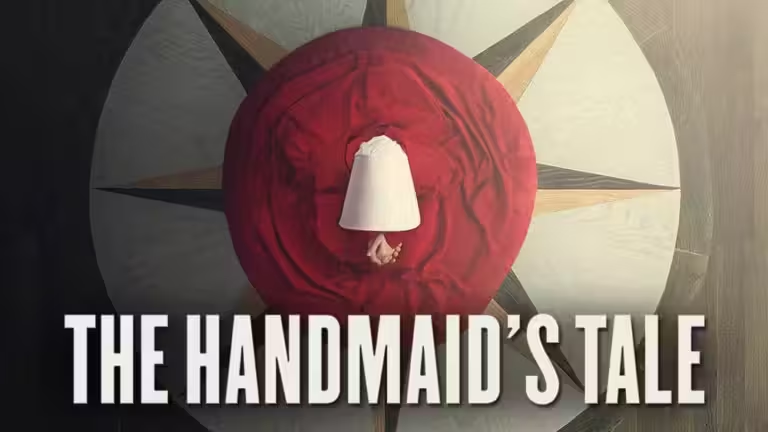
Margaret Atwood’s The Handmaid’s Tale depicts the Republic of Gilead, a totalitarian theocracy that turns women’s fertility into state property. Through Offred’s fragmented memories, private acts of defiance and reconstructed testimony, the novel examines reproductive control, religious fundamentalism, propaganda and the fragile survival of individual identity.
Published in 1985, The Handmaid’s Tale is one of Margaret Atwood’s most influential novels. It combines dystopian fiction, political satire, speculative fiction, autobiography, Gothic motifs, fairy-tale imagery and the conventions of the survival narrative. These genres allow Atwood to examine a political system from the limited and intensely personal perspective of one woman trapped inside it.
The novel is not primarily a prediction of one inevitable future. It is a warning about the speed with which democratic rights can disappear when fear, political violence, religious language and modern technology are combined. Gilead does not invent oppression from nothing: it selects older forms of domination and reorganises them into a new system.