
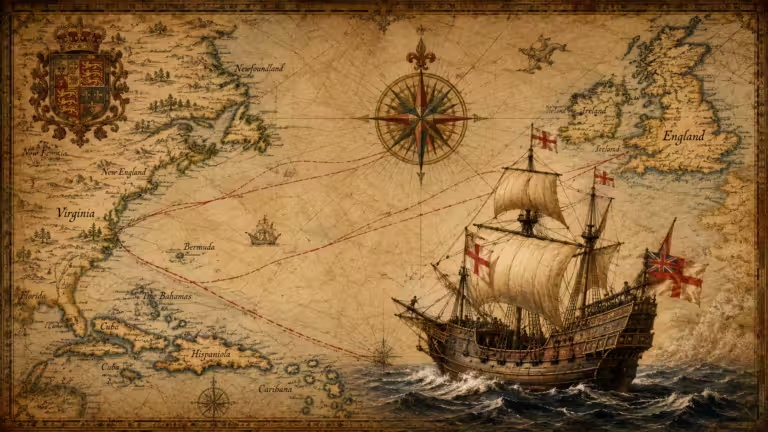
English expansionism began within the British Isles before developing into an Atlantic and global imperial system. Military conquest, religious policy, plantations, maritime exploration, chartered companies, settlement, mercantilism and slavery all contributed to this expansion. However, the process was neither continuous nor inevitable, and it produced conquest, resistance and dispossession alongside trade and migration.
What was English expansionism?
English expansionism describes the territorial, commercial and political growth of the English state beyond its original boundaries. It began with attempts to control neighbouring territories within the British Isles. It later extended across the Atlantic, the Caribbean, Africa and Asia through exploration, commerce, settlement and military force.
This process should not be reduced to a single national ambition. Monarchs sought strategic security and greater authority, while merchants pursued markets and profits. Religious communities wanted places to establish their own institutions, and migrants searched for land or employment. Chartered companies, private investors, soldiers, sailors and settlers frequently acted before the Crown possessed either the resources or the intention to govern directly.
Nor were “English” and “British” expansion interchangeable. England and Scotland remained separate kingdoms until the Acts of Union created Great Britain in 1707. Before that date, English overseas projects could compete with Scottish ventures. Afterwards, Scottish merchants, administrators, soldiers and settlers became deeply involved in the expanding British Empire.